
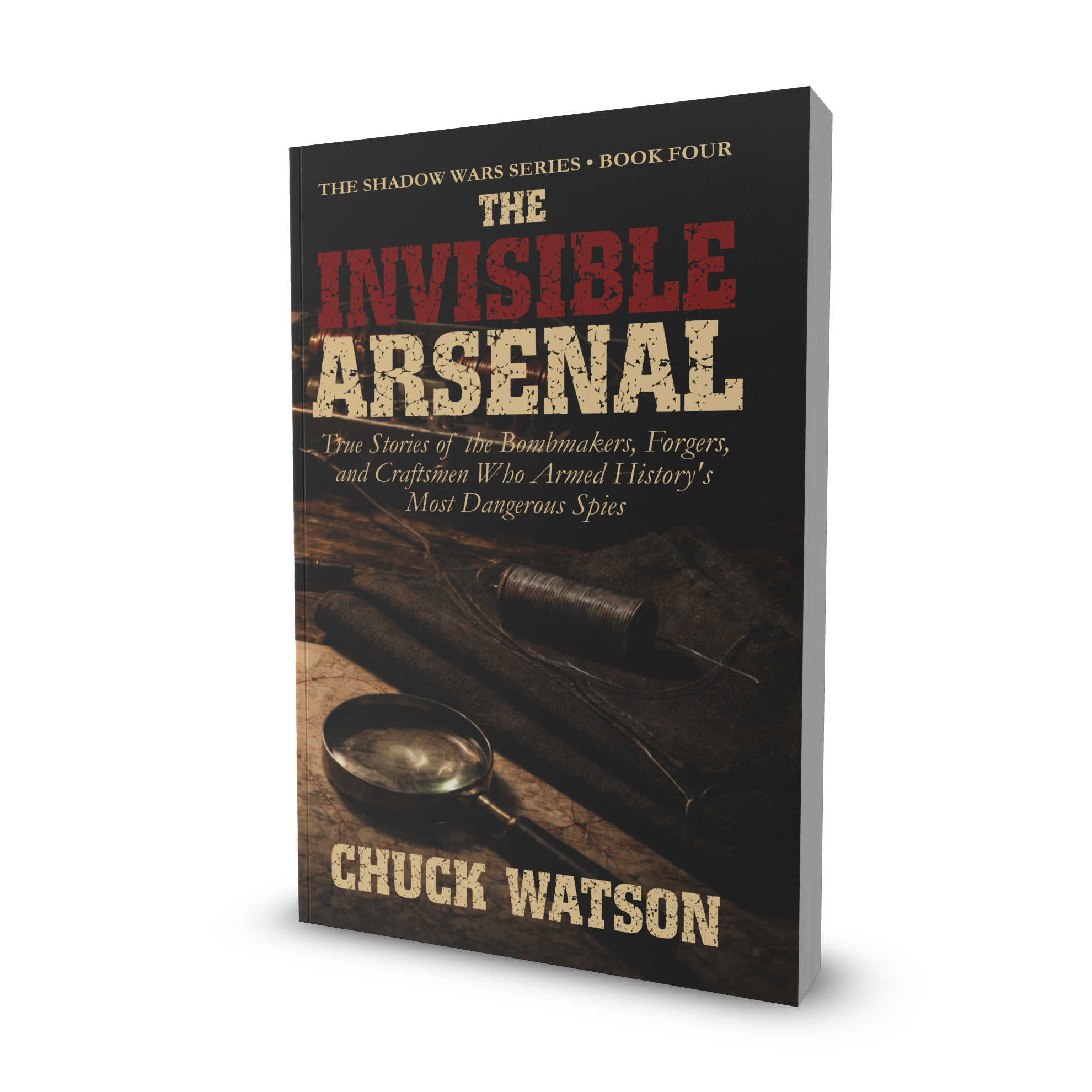
THE INVISIBLE ARSENAL
True Stories of the Bombmakers, Forgers, and Craftsmen Who Armed History's Most Dangerous Spies
The history books remember the spies. They forgot the people who made them possible.
The Invisible Arsenal brings together twenty gripping true stories of the chemists, engineers, tailors, and forgers who worked in secret government workshops to produce the tools of covert war — the people without whom the spies were just people with bad cover stories. Drawn from declassified files, firsthand memoirs, and survivor testimony, these stories are ingenious, dangerous, and impossible to put down.
No famous names. No famous faces. Just the untold truth about the invisible workforce that built the secret war.
Inside you'll discover:
The American chemist who invented explosive flour that could be baked into bread and carried across enemy borders in a flour sack
The Jewish prisoners at Sachsenhausen who were forced to forge millions in British banknotes — and quietly sabotaged their own work to slow the Nazi war machine
The engineer who built the first clandestine radio small enough to fit inside a suitcase so resistance fighters could communicate with London
The tailors who pressed trouser creases in the continental manner because a British crease could get an agent shot at a checkpoint
Whether you're a lifelong WWII reader or just discovering the hidden machinery of the secret war, The Invisible Arsenal delivers the stories that history filed under someone else's name — and the craftsmen who never received credit for what they built.
Book 4 of the Shadow Wars Series.
The most dangerous objects in history looked like nothing at all.
Sneak a Peek (History Like You've Never Read It)
Curious what's inside? Here's a glimpse of what The Invisible Arsenal delivers — declassified secrets, forgotten genius, and true stories of the bombmakers, forgers, and craftsmen who built the tools that kept the secret war running.
This isn't about the spies. It's about the invisible workforce behind them — the people who worked in converted country houses and secret workshops building weapons that looked like nothing at all.
Warning: May cause you to look at ordinary objects very differently, a sudden fascination with WWII tradecraft, and the realization that the most important people in the war never got a single medal for it.